Drainage advice
How We Can Improve Your Drain With Drain Lining
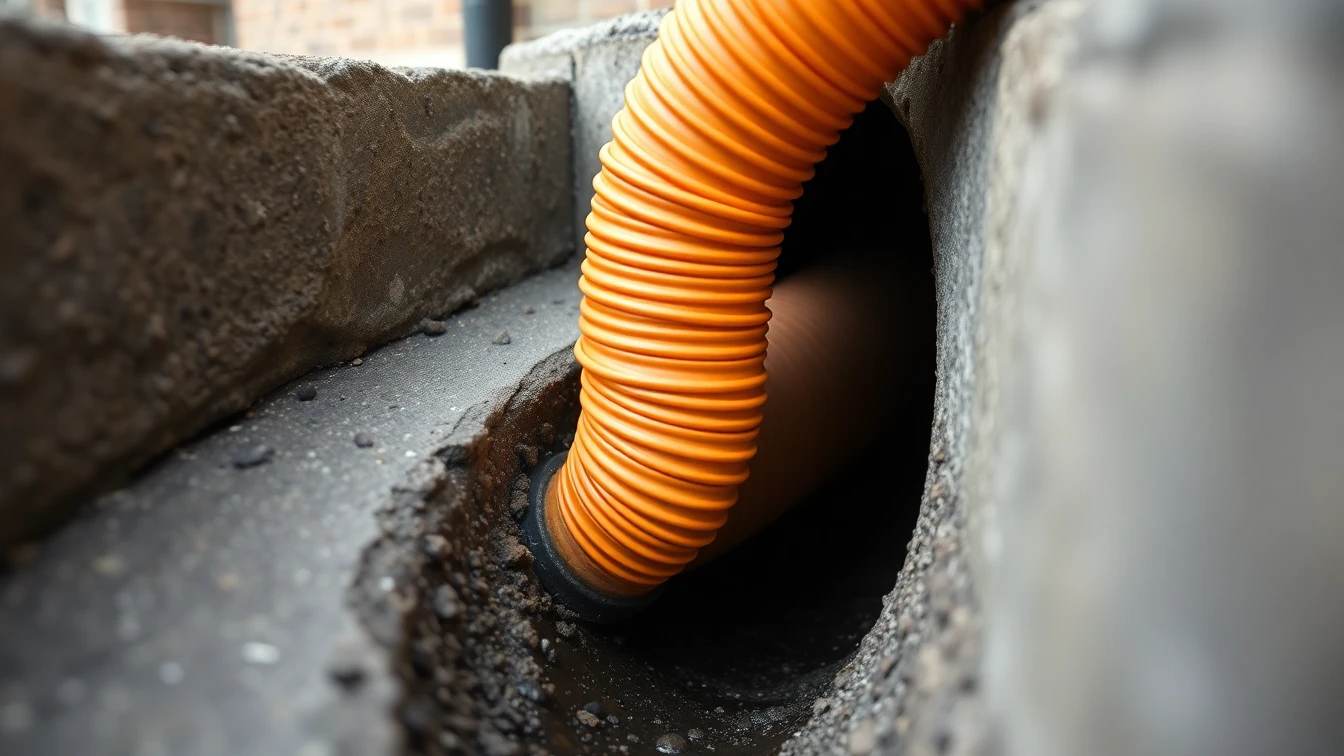
For many years, a structurally damaged drain meant one thing: excavation. Digging up the garden, breaking through the driveway, disrupting landscaping, and the associated costs and inconvenience that come with it. Drain lining — also called pipe relining or CIPP (cured-in-place pipe) lining — changed this. It’s now possible to repair a cracked, root-damaged, or deteriorating drain from the inside, without a single spade going into the ground.
What Is Drain Lining?
Drain lining involves inserting a flexible liner — saturated with a specialist resin — into the existing damaged pipe. Once in position, the liner is inflated to press against the pipe walls and left to cure (harden). When the resin sets, it forms a new, smooth, structurally complete pipe inside the old one. The result is a drain that is as strong or stronger than the original, with a smooth bore that resists future scale and root ingress.
The liner is typically made from a fibreglass or felt fabric saturated with epoxy, polyester, or vinyl ester resin. Curing is achieved either by ambient temperature, circulating hot water, UV light, or steam — the method depends on the materials used and the pipe diameter.
What Problems Does Drain Lining Fix?
Drain lining is suitable for a range of structural problems:
- Cracked or fractured pipes — caused by ground movement, root pressure, or age. Lining bridges cracks and prevents further ingress of water or roots
- Root ingress — once roots are cleared by jetting or cutting, a liner prevents re-entry through the same cracks or joints
- Displaced or open joints — lining bridges the gap and creates a continuous sealed pipe
- Corroded pipes — particularly in older cast-iron or concrete systems where the pipe material has degraded
- Leaking joints — preventing groundwater from entering the drainage system or sewage from seeping out into the surrounding soil
- Pipes with minor deformation — where the pipe cross-section has partially collapsed but still allows a liner to pass through
Drain lining is not suitable for completely collapsed sections or where the pipe deformation is so severe that a liner cannot be inserted. In those cases, excavation remains necessary, though lining can often be combined with short targeted excavations to address specific problem spots.
The Drain Lining Process
A drain lining project typically follows these stages:
1. CCTV Survey: Before any work begins, the drain is surveyed on camera to map the full extent of the damage and confirm that lining is appropriate. The survey identifies the location and nature of all defects and determines the liner specification required.
2. High-Pressure Jetting: The drain is thoroughly cleaned with high-pressure water jetting to remove all fat, scale, root material, and debris. The pipe walls need to be clean for the resin to bond effectively.
3. Liner Preparation: The felt or fibreglass liner is cut to length, measured against the depth and specification of the damaged section, and saturated with resin.
4. Liner Installation: The resin-saturated liner is inserted into the drain — usually through an existing access point or manhole — and positioned to cover the full extent of the damaged section.
5. Inflation and Curing: An inflatable bladder is inserted inside the liner and inflated to press it firmly against the pipe walls. The resin is then cured — time varies by method, from around 30 minutes for UV curing to several hours for ambient curing.
6. Final CCTV Inspection: Once cured, the drain is re-surveyed on camera to confirm the liner has adhered correctly, covers all defects, and the bore is clear. The bladder is removed and the completed repair is documented.
Advantages of Drain Lining Over Excavation
- No disruption to landscaping, driveways, or gardens — the access points are existing manholes or inspection chambers
- Significantly lower cost in most cases — the saving on reinstatement work alone can be substantial
- Faster completion — most lining projects complete in a single day
- Long service life — properly installed CIPP lining is expected to last 50 years or more
- Improved hydraulics — the smooth interior of the liner reduces friction and improves flow compared to old, corroded, or rough-walled pipes
- Minimal mess and disruption to the household
Is Drain Lining Right for Your Property?
Drain lining is particularly well-suited to:
- Period properties in North London with Victorian or Edwardian clay drains suffering root ingress
- Drains running beneath established gardens or block-paved driveways where excavation would be very disruptive
- Properties where the drain fault is known to be in a specific, accessible section
- Commercial properties where service continuity is a priority
To find out whether drain lining is the right solution for a damaged drain on your property, the first step is always a CCTV survey. London Drain Clear Ltd carries out surveys and drain lining across Enfield, Barnet, Edgware, Wembley, Cheshunt, Potters Bar and Southgate. use our contact form to discuss your drainage problem.