Drainage advice
Why do drains block so often in North London's older housing?
TL;DR
Three things drive most of the drain blockages we see across North London: Victorian and post-war clay drainage that’s now 70-100+ years old, mature street trees whose roots find their way into pipe joints on leafy roads, and hard water gradually scaling up the inside of pipes that were already narrow to begin with. Which of the three dominates depends on the street you’re on — Barnet and Southgate’s root problems look different to Edgware’s ageing clay or Wembley’s grease-heavy commercial drains.
Root intrusion on the leafy streets
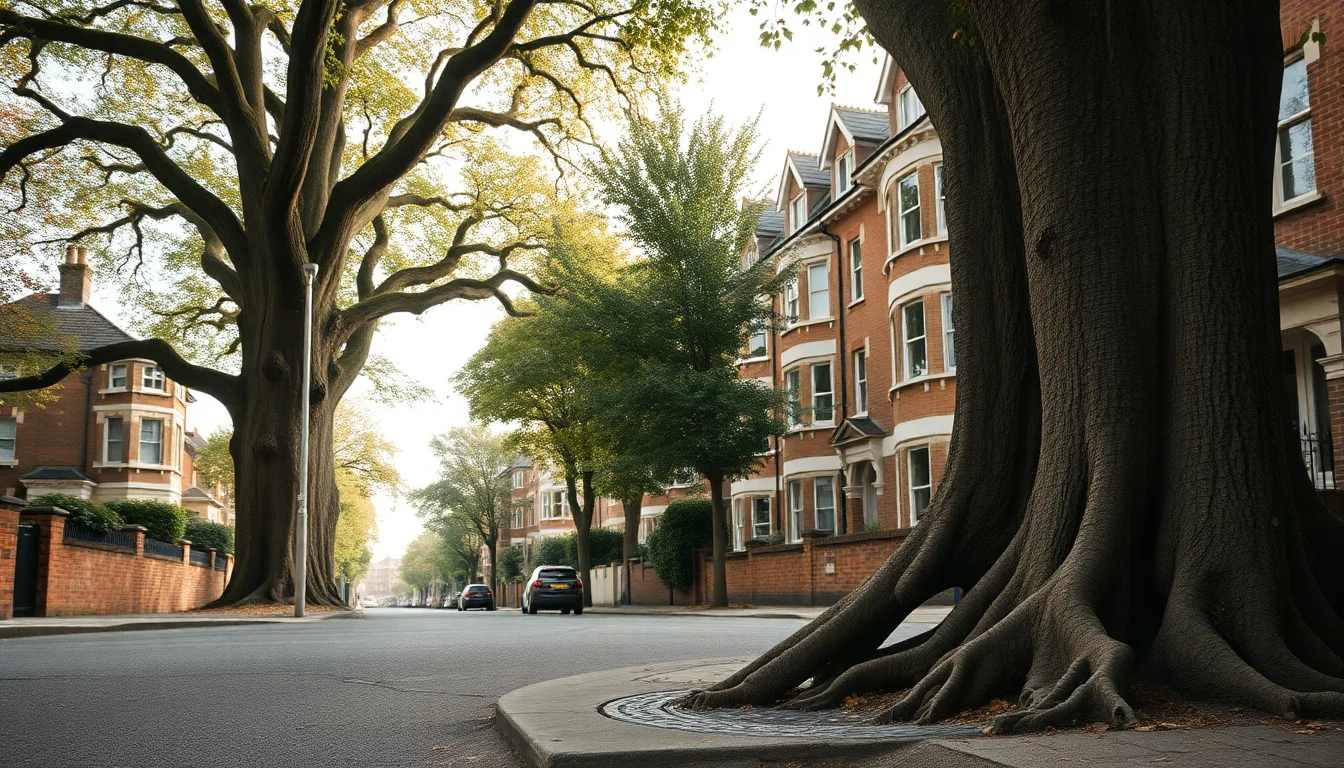
Drive around Southgate, Winchmore Hill, or the older parts of the Borough of Barnet — Hadley Wood, Totteridge, Whetstone — and the thing you notice is the trees. London planes, oaks and horse chestnuts line practically every residential road, planted when the Victorian and Edwardian terraces went up and now well over a century old. Roots search for moisture, and London clay retains water well enough that roots follow the easiest path they can find — which is often straight into the joints of an old clay drain a few feet underground.
Once a root gets a foothold in a joint, it doesn’t stay small. It expands the crack it entered through, catches debris passing through the pipe, and narrows the bore until what should be a clear run becomes a repeated blockage. Rodding or jetting clears the immediate obstruction, but if the entry point isn’t sealed the roots are usually back within a couple of years — which is why a recurring blockage on a tree-lined street is one of the clearest signals that a CCTV survey, rather than another round of rodding, is the sensible next step.
Seventy to a hundred years of clay
The other big driver is simply the age of the pipe network itself. Large parts of Edgware were built out rapidly in the 1940s and 1950s using salt-glazed clay drainage that’s now 70-80 years old, with shallow cover depths typical of that era. Over decades, ground movement from frost and from the same tree roots mentioned above has worked joints loose and, in some cases, deformed sections of pipe into an egg shape rather than a true circle. A pipe that’s lost its round cross-section restricts flow even before anything blocks it outright — solids settle at the low point of the oval rather than being carried through.
Victorian terraces in Enfield, Barnet and further south have an even older layer of clay drainage behind them, much of it laid as combined drains serving several houses on a single run — which is also why a blockage in one of these older streets can sometimes affect more than one household at once.
Hard water scale narrowing the bore
North London’s water supply is on the hard side, and that means limescale — calcium and magnesium deposits — gradually builds up on the inside of pipes wherever water runs through them, including the older sections of clay drainage that were already narrower than a modern uPVC run. It’s a slow process, so it rarely shows up as a sudden blockage on its own; instead it shows up as a drain that’s been “a bit slow” for months before it finally stops altogether, or as a pipe that blocks again disconcertingly soon after being cleared. Descaling — using a jetting head to strip the scale back to bare pipe rather than just clearing whatever’s currently stuck — is the fix, and it’s usually worth doing once a genuine blockage has been cleared rather than leaving the narrowed bore to cause the next one.
It varies street by street
None of this plays out identically everywhere. Wembley’s drainage problems lean commercial — the concentration of restaurants and takeaways around Wembley Central and Wembley Park puts a heavy grease load through both private and shared drain runs, which is a different problem to root intrusion or ageing clay even though the symptoms (slow draining, recurring blockages) can look similar from the kitchen sink. Barnet and Southgate’s tree-lined streets point more towards root intrusion. Edgware’s post-war housing stock points more towards joint displacement and pipe deformation in old salt-glazed clay.
That’s why it’s worth reading the specific picture for your own area rather than assuming your neighbour’s blockage and yours have the same cause — we cover the detail for Enfield, Barnet, Edgware and Wembley on their own pages, including what we typically find and what usually fixes it.
Frequently Asked Questions
Why do North London drains keep blocking? Most repeat blockages come down to one of three underlying causes rather than bad luck: tree roots that have found their way into an old clay drain joint, a pipe that’s aged to the point of joint displacement or deformation, or scale build-up narrowing the bore. Clearing the immediate blockage without addressing which of these is happening tends to mean the same drain blocks again within a year or two.
Is it the trees or the pipe age that causes most blockages? It depends on the street. On roads with mature street trees — much of Southgate, Winchmore Hill and the older parts of Barnet — root intrusion is usually the leading cause. In areas built out rapidly after the Second World War, like much of Edgware, pipe age and joint displacement tend to matter more, even without significant tree cover.
Does hard water really affect drains, not just kettles? Yes. Limescale deposits form wherever hard water runs, and that includes the inside of drain pipes as well as household appliances. It’s a gradual process, so it’s rarely the sole cause of a first-time blockage, but it does narrow the effective bore of older pipes over years, making them more prone to blocking from other causes as well.
How do I know which cause applies to my drain? A CCTV survey is the only reliable way to tell root intrusion, joint displacement, and scale build-up apart from the surface, since all three can produce similar symptoms — slow draining, gurgling, recurring blockages. If you want to discuss what’s likely going on at your property, get in touch via the online enquiry form.