Drainage advice
Blocked drain in Edgware: what 70-year-old clay drains need
TL;DR
If you’ve got a blocked drain in Edgware, the cause is very often the age of the pipe rather than bad luck — much of HA8 was built out in the 1940s and 1950s using salt-glazed clay drainage that’s now 70-80 years old, and pipes that age develop displaced joints and lose their round shape. We offer a same-day response across HA8 with no call-out fee — see the Edgware coverage page for the detail, or go straight to the online enquiry form for a quote.
Why HA8’s clay drains are different from a newer estate’s
Edgware’s rapid post-war expansion meant a lot of drainage went into the ground in a short window, using the standard material of the era: salt-glazed vitrified clay. It’s a hard, durable pipe — but it’s also rigid, laid in shallow trenches typical of 1940s and 1950s construction, and it doesn’t flex the way a modern uPVC pipe does when the ground around it moves.
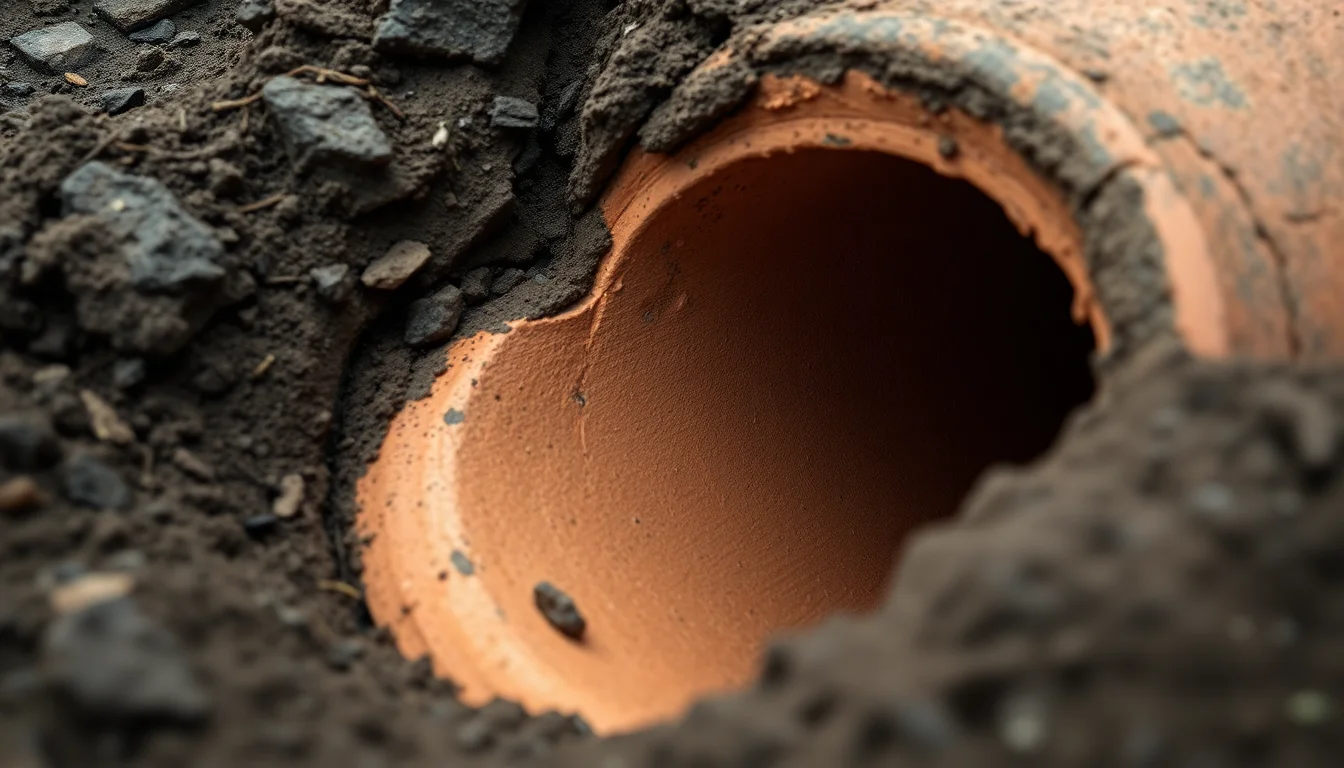
Over seven or eight decades, that rigidity becomes the problem. London clay soil expands when it’s wet and shrinks when it dries, and that cyclical movement works away at the mortar joints between sections of pipe until they shift out of alignment. A displaced joint creates a small ledge inside the pipe — not enough to stop water on its own, but exactly the kind of snag that catches debris and starts a blockage. The same ground pressure can also deform a section of pipe from a true circle into an oval — CCTV surveys across HA8 regularly turn up exactly this pattern, and an oval pipe carries less flow at its narrowest point even before anything’s actually stuck in it.
Burnt Oak and Mill Hill sit at different points on this spectrum. Burnt Oak tends to have the older, shallower systems where these problems show up more often; Mill Hill’s newer developments generally use deeper modern plastic runs that hold up better, though poor original jointing can still cause the odd issue.
Descaling, jetting or no-dig repair — which one you actually need
These get used almost interchangeably by people describing “getting the drain sorted,” but they fix different things, and using the wrong one just means paying for the job twice.
Descaling strips built-up limescale and grease from the pipe wall using a high-pressure jetting head, restoring the pipe back to something close to its original bore. It’s the right call when the pipe itself is structurally sound and the problem is genuinely a narrowed bore rather than a displaced joint — which is common enough in HA8’s older clay given decades of hard water passing through it.
Jetting clears an active blockage — fat, debris, root intrusion, whatever’s actually stopping the flow right now. Cold-water jetting handles the vast majority of domestic blockages; hot-water jetting is really only needed where solidified grease from a commercial kitchen is the problem, which is more of a Wembley issue than an Edgware one. Jetting is fast and effective, but it clears the pipe — it doesn’t fix a displaced joint or an oval section, which is why a drain that keeps blocking despite repeated jetting is usually telling you something structural is going on underneath.
No-dig repair — drain relining — is what actually fixes displaced joints and deformed sections rather than just clearing around them. A resin-saturated liner is pulled through the damaged length of pipe from the nearest access point and cured in place, creating a new, smooth-bore pipe inside the old one without digging up a driveway or garden. It’s the option that stops a recurring HA8 blockage from recurring again next year, because it seals the entry point rather than just clearing what’s got in through it. See our drain repairs page for how the process works end to end.
The way to know which of the three you need is a CCTV survey — running a camera through the pipe to actually see whether you’re looking at scale, an active blockage, or a structural defect, rather than guessing from the symptoms alone.
Frequently Asked Questions
Why do Edgware drains block more than in newer areas? Mostly because of the age and material of the pipework rather than anything residents are doing differently. A lot of HA8 was built out in the 1940s and 1950s with salt-glazed clay drainage that’s now displaying decades’ worth of joint displacement and, in places, oval deformation from sustained ground pressure — issues that newer plastic drainage systems generally don’t develop.
How do I know if my Edgware drain needs jetting or a repair? If a blockage clears with jetting and doesn’t come back, it was likely just debris or grease. If the same drain blocks again within months despite being jetted, that’s a strong signal the underlying problem is structural — a displaced joint or deformed section — and a CCTV survey is the next sensible step rather than another round of jetting.
Can Edgware’s clay drains be repaired without digging up the garden? Usually, yes. Displaced joints and deformed sections are exactly what no-dig relining is designed to fix — a liner is introduced through an existing access point and cured in place, without excavating the driveway or garden above it. Full excavation is really only needed where a pipe has collapsed rather than simply deformed.
Do you offer a same-day service in Edgware? Yes, we cover HA8 end to end — Edgware Town, Burnt Oak, Mill Hill, Canons Park and Stanmore — with the same engineers and equipment on every call-out. Get a quote via the online enquiry form with your postcode and what’s happening, and no call-out fee applies either way.
For the full picture of what we cover in HA8, see the Edgware page, or head straight to the online enquiry form to get a same-day quote.