Drainage advice
How to unblock a blocked sewer pipe (step by step)
TL;DR
Locate the inspection chamber nearest the blockage, rod from the downstream side (the chamber closer to the public sewer) rather than pushing debris further along, and switch to high-pressure jetting if rodding won’t shift it. If the same sewer pipe blocks again within weeks or months, that’s the signal to stop rodding and book a CCTV survey instead — a recurring blockage in North London’s older clay drainage is very often a symptom of a cracked or displaced pipe rather than a fresh obstruction. For anything beyond a straightforward clear, emergency drain unblocking or a full drain clearance visit is the safer route.
Safety first — this is sewage, not a kitchen sink
A blocked sewer pipe means you’re working around raw sewage, which carries bacteria, viruses and gases including hydrogen sulphide and methane. Before opening any chamber cover: heavy-duty rubber or nitrile gloves, eye protection, and old clothes or overalls you’re happy to dispose of are the minimum. Keep your face away from an open chamber — if you get a strong rotten-egg smell, that’s hydrogen sulphide, and the sensible response is to step back and ventilate rather than lean in further. Wash thoroughly afterwards, and don’t use anything you’ve touched near an open chamber anywhere near food preparation until it’s properly cleaned.
If you have any cuts or grazes on your hands, cover them properly or skip the DIY attempt entirely — sewage exposure through broken skin is exactly the kind of thing that turns a blocked drain into a genuinely unpleasant infection.
Locating and rodding from downstream
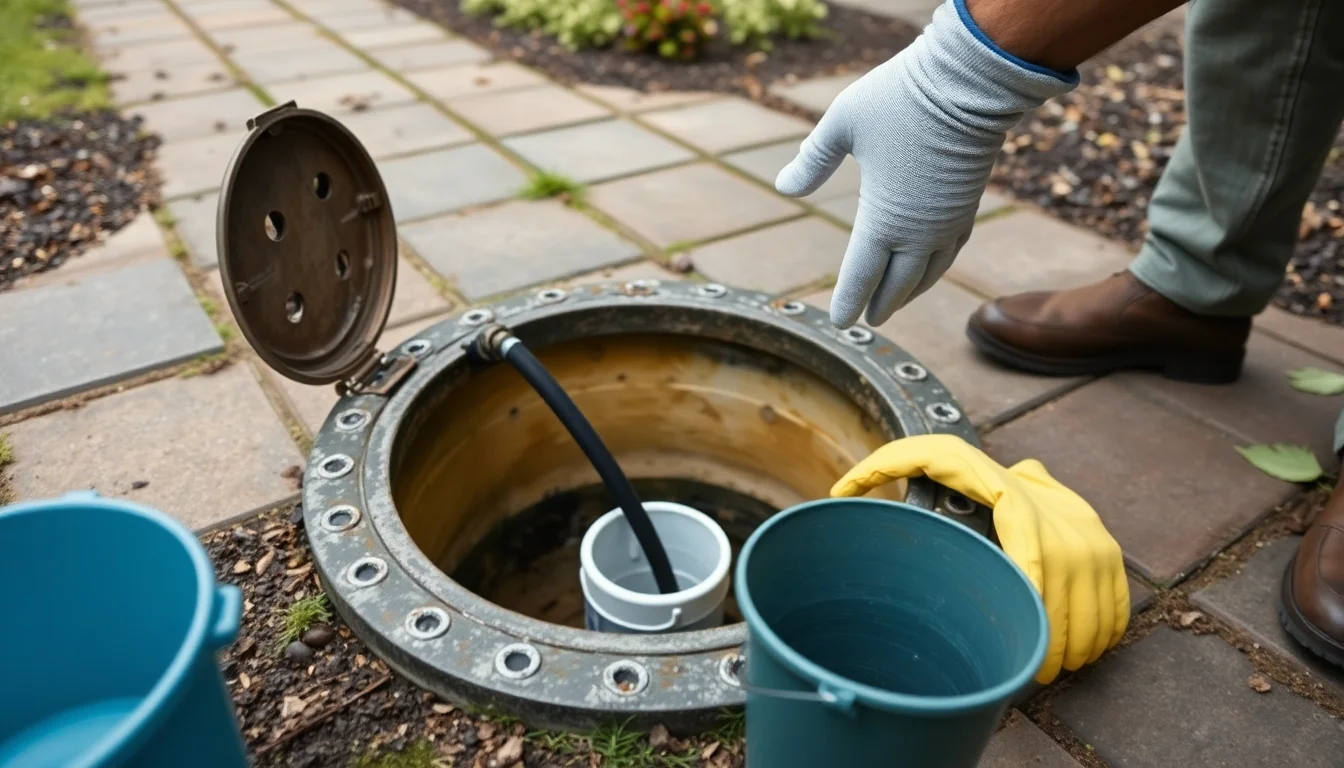
In many North London Victorian terraces, the inspection chamber is a metal or concrete cover set into the front garden, driveway or a rear passage — often closer to the property boundary than most people expect. If you can’t find it, check whether the drain runs to the front or back of the property, and look for a slight depression or cover along that line. If the blockage seems to start inside the house rather than outside — and you’re trying to locate the internal cleanout on the main run first — see how to clear a main sewer line for that specific starting point.
The key technical point that’s easy to get wrong: always rod from the chamber that’s downstream of the blockage — closer to the public sewer — rather than upstream. Rodding from upstream just pushes the obstruction further along the pipe, sometimes into a section that’s harder to reach. Working from downstream lets you push the blockage forward, out of the system, rather than compacting it deeper in.
Feed a flexible drain rod into the chamber, turning it clockwise as you advance (never anti-clockwise — that’s how sections unscrew and get left in the pipe). Once you meet resistance, use a firm push-pull motion rather than brute force. After a few attempts, run water through and check whether it’s flowing freely before deciding whether to continue or move to the next step.
When rodding isn’t enough — jetting and CCTV
If rodding hasn’t shifted the blockage after a couple of genuine attempts, the obstruction is probably too solid or too far along for a hand rod to reach — tree root intrusion, a scale build-up, or debris packed further down the run. This is where high-pressure jetting takes over: it scours the full circumference of the pipe wall rather than just punching a hole through the middle of whatever’s blocking it, which clears more thoroughly and is far less likely to leave a partial obstruction that blocks again within days.
If the blockage keeps coming back even after proper jetting, that’s usually not a debris problem any more — it’s a structural one. North London’s older clay drainage is prone to root intrusion at pipe joints and, in some areas, to displaced or deformed sections after decades of ground movement. A CCTV survey pushes a camera through the pipe to actually see what’s going on, rather than guessing from the symptoms, and tells you whether you’re looking at another jet-clear, a root cut and reline, or something more serious.
London Drain Clear Ltd has no call-out fee — the cost of jetting or a survey is confirmed via the online enquiry form once we know what’s involved, not before.
Frequently Asked Questions
Can I unblock a sewer pipe myself? For a straightforward blockage — accessible inspection chamber, rodding from the correct downstream side, proper PPE — many people manage it themselves. Where it stops being sensible DIY is a recurring blockage, a chamber you can’t locate safely, or any sign the problem is structural rather than a simple obstruction.
How do I clear a blocked sewer pipe outside my house? Find the inspection chamber nearest the blockage — usually within a few metres of the property boundary in most North London terraces — and rod from the chamber that’s downstream, closer to the public sewer connection, rather than the one nearer the house. If that doesn’t clear it, jetting reaches further and works more thoroughly than a hand rod.
What’s the difference between rodding and jetting a sewer pipe? Rodding physically pushes through a blockage with a rigid or semi-flexible rod — effective for straightforward obstructions within reach. Jetting uses high-pressure water to scour the entire pipe wall, which clears more completely and can reach much further along the run, but needs proper equipment rather than a domestic drain rod set.
When should I stop trying to unblock a sewer pipe myself and call someone? If two or three genuine rodding attempts haven’t cleared it, if water is backing up into the property, or if the same pipe has blocked more than once in a short period, it’s time to call in drain clearance rather than keep trying — a recurring blockage usually means there’s something structural to find, which needs a camera rather than a rod.
If you’re dealing with a blockage that won’t shift, or it’s happening out of hours, emergency drain unblocking is available — get in touch via the online enquiry form and we’ll confirm timing and cost before anything starts.